Signal messenger enhances protection against AI agents on iOS and Android
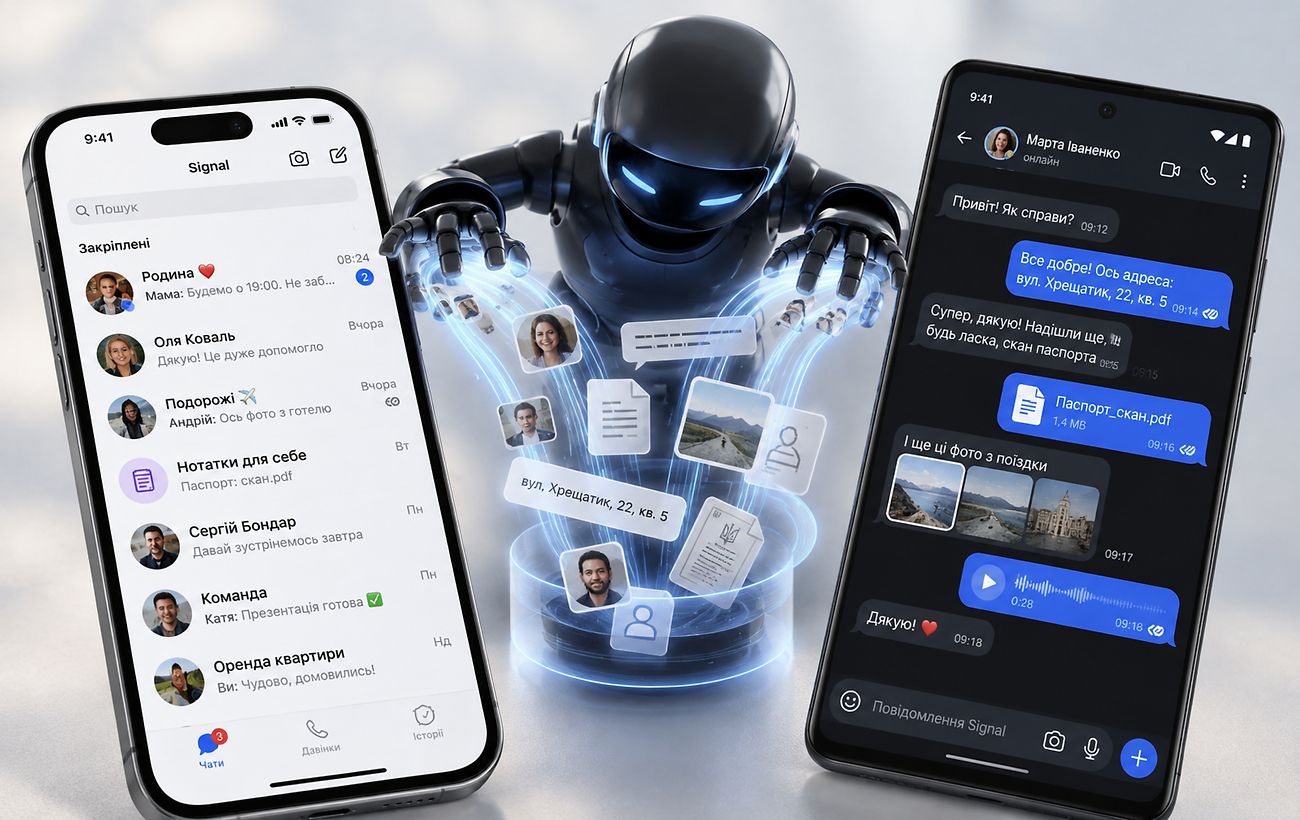
The Signal secure messenger team is implementing restrictions on screenshots in new iOS and Android versions to block built-in artificial intelligence access to private chats.
 💡Tech
Photo: RBC-Ukraine
Key points
- Signal blocks screenshots on Android and iOS to protect against AI
- Apple and Google AI agents analyze on-screen content on devices
- Users can disable protection in settings at their own risk
- Company urges tech giants to establish transparent security standards
The development team behind the secure messenger Signal has announced additional security measures on mobile platforms iOS and Android. These updates aim to prevent modern artificial intelligences and built-in AI agents from reading screen contents while users interact with the app. The growing integration of smart assistants directly into operating systems creates serious risks for the confidentiality of private correspondence.
The threat from built-in AI assistants
Leading tech giants such as Google, Apple, and Microsoft are actively integrating systemic artificial intelligence capabilities into their products. Tools like Gemini Intelligence on Android or Onscreen Awareness via Siri AI on iOS constantly analyze on-screen information to assist users. As a result, confidential data from Signal chats can potentially end up in local databases or on remote servers used by AI developers, undermining end-to-end encryption guarantees.
To mitigate these risks, the application now restricts screenshot creation on iOS and enforces blocking on Android versions where AI assistant screen-reading attempts are detected. Users can disable this protection in app settings, though the company warns this exposes chat contents to AI agents. Meanwhile, developers acknowledge that these measures do not completely solve the issue due to a lack of clear developer tools from OS manufacturers, and discussions on establishing unified industry privacy standards are ongoing.
While this news addresses the global technology market, digital security and privacy in messaging remain universally relevant. Active mobile device users often overlook how background artificial intelligence features in modern operating systems process their personal data. Such developer actions reflect a broader global trend toward strengthening information security. In practice, this means smartphone owners should pay closer attention to privacy settings on their devices, as these developments may eventually reshape how applications interact with system-level OS services.
Source RBC-Ukraine — rbc.ua/ukr/news/shi-agenti-mozhut-chitati-vashi-chati-signal-179542… ↗
Read next
 🛡️Security
Blow to Kremlin's African Ambitions: Defense Forces Sink Corvette 'Mercury' off Libya
Ukrainian naval drones destroyed one of Russia's newest warships in the Mediterranean, significantly weakening Moscow's logistics and influence in the region.
 🛡️Security
Heavy snowfall and freezing weather expected in the Sumy region
The Sumy region is bracing for a significant shift in weather, bringing wet snow, ice accumulation, and slippery roads over the coming days.
 🛡️Security
Western intelligence warns of Russian plans to deploy nuclear weapons in space
Western intelligence agencies report that Russia could deploy a satellite carrying a nuclear warhead to low Earth orbit this year, threatening global infrastructure.
 🏛️Politics
Constitutional Court of Ukraine on the Brink of Losing Quorum as Judge Count Drops to 12
The number of judges at the Constitutional Court of Ukraine has dropped to 12, putting the Grand Chamber at risk and halting the Second Senate's ability to review complai…
 🛡️Security
Case Against Russian Generals Over Sumy Shelling Sent to Court
The Sumy Regional Prosecutor's Office has sent an indictment to court against eight Russian military commanders who organized artillery strikes on the city in June 2025.
 🛡️Security
Motivational Contracts in the Armed Forces: Can Servicemembers Resign After Demobilization
The Ministry of Defense clarified the details regarding new motivational agreements and the conditions for discharging from service.